
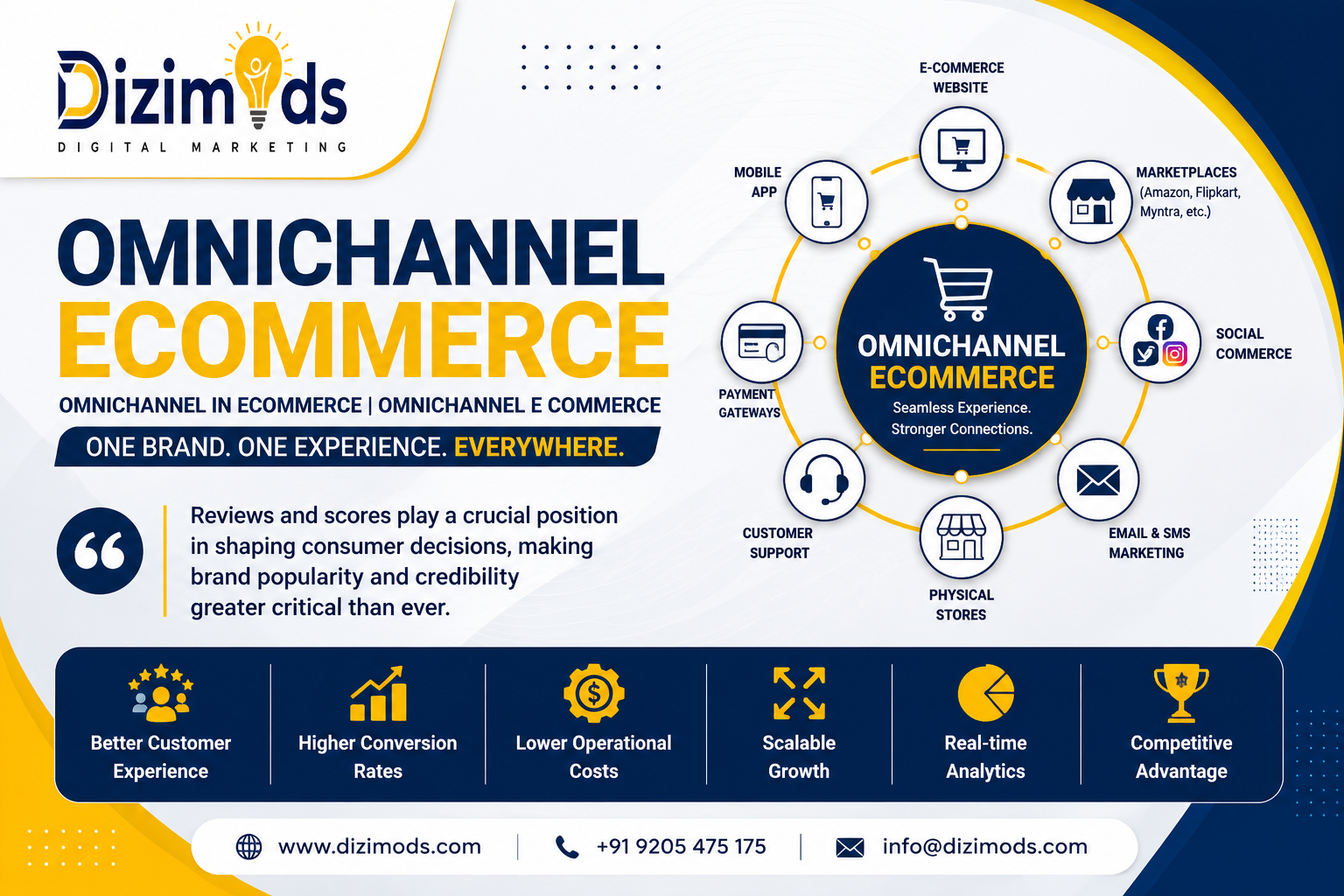
The ecommerce landscape has transformed significantly over the past decade. Customers no longer rely on a single platform to discover, compare, and purchase products. Instead, they interact with brands through websites, mobile apps, online marketplaces, social media platforms, and even physical stores before making a purchase. To meet these evolving expectations, businesses are adopting omnichannel in ecommerce strategies that create a unified and consistent shopping experience across every customer touchpoint.
Omnichannel in ecommerce is more than simply selling products on multiple platforms. It is about integrating every sales, marketing, inventory, and customer service channel into one centralized ecosystem. This allows businesses to provide personalized experiences, streamline operations, improve customer satisfaction, and increase revenue.
What is Omnichannel in Ecommerce?
Omnichannel in ecommerce is a strategy that connects all online and offline sales channels to deliver a seamless customer journey. Whether customers interact with your brand through your website, mobile application, social media, marketplaces like Amazon or Flipkart, or a physical retail store, they experience the same level of service, branding, and convenience.
For example, a customer may first discover your product through an Instagram advertisement, visit your ecommerce website to learn more, place an order on a marketplace, and later request customer support through WhatsApp. With an omnichannel strategy, all these interactions are connected, creating a smooth and personalized shopping experience.
Unlike multichannel selling, where channels operate independently, omnichannel ecommerce ensures that customer data, inventory, pricing, and orders remain synchronized across every platform.
Why Omnichannel in Ecommerce is Important
Consumer behavior has changed dramatically due to digital transformation. Shoppers now expect brands to be available across multiple channels while offering consistent experiences.
Some major benefits include:
- Improved customer satisfaction
- Stronger brand consistency
- Better customer engagement
- Increased customer retention
- Higher sales and revenue
- Centralized inventory management
- Faster order fulfillment
- Better business insights through analytics
Businesses that implement omnichannel ecommerce often experience improved operational efficiency and stronger long-term customer relationships.
Key Channels in Omnichannel Ecommerce
Ecommerce Website
Your website acts as the foundation of your online business. It should integrate seamlessly with inventory systems, payment gateways, CRM software, shipping providers, and marketing tools.
Online Marketplaces
Selling through marketplaces such as Amazon, Flipkart, Myntra, Meesho, and other ecommerce platforms expands your reach to millions of customers. Omnichannel systems allow centralized management of product listings, inventory, pricing, and orders.
Mobile Commerce
Mobile shopping continues to dominate ecommerce. Businesses must ensure their websites are mobile-friendly or provide dedicated mobile applications that offer a smooth purchasing experience.
Social Commerce
Platforms such as Instagram, Facebook, Pinterest, and WhatsApp have become major ecommerce channels. Businesses can showcase products, engage customers, and even process purchases directly through these platforms.
Physical Retail Stores
Brick-and-mortar stores remain important for many businesses. Omnichannel integration enables customers to browse products online, check in-store availability, and choose convenient delivery or pickup options.
Benefits of Omnichannel in Ecommerce
Seamless Customer Experience
Customers can move effortlessly between different channels without encountering inconsistent pricing, product information, or customer service.
Improved Inventory Management
Real-time inventory synchronization reduces overselling, prevents stock shortages, and improves order accuracy across every platform.
Increased Sales Opportunities
Selling across multiple channels increases product visibility, allowing businesses to reach more potential customers and improve conversion rates.
Enhanced Customer Loyalty
Personalized recommendations, consistent communication, and reliable service encourage repeat purchases and long-term customer relationships.
Better Decision Making
Centralized reporting provides insights into customer behavior, product performance, inventory levels, and marketing effectiveness, helping businesses make data-driven decisions.
Essential Features of Omnichannel Ecommerce
A successful omnichannel ecommerce solution should include:
- Unified inventory management
- Multi-channel order processing
- Product catalog synchronization
- Customer Relationship Management (CRM)
- Secure payment gateway integration
- Automated shipping and logistics
- Marketing automation
- Customer support integration
- Real-time analytics and reporting
- Mobile-responsive ecommerce platform
These features work together to create an efficient and scalable ecommerce ecosystem.
Challenges of Omnichannel Ecommerce
Although omnichannel ecommerce provides significant advantages, businesses often face challenges during implementation.
Common challenges include:
- Integrating multiple software platforms
- Synchronizing inventory across channels
- Maintaining consistent pricing
- Managing customer data securely
- Coordinating order fulfillment
- Handling returns from different platforms
- Training employees on new systems
Selecting the right technology and experienced implementation partners helps businesses overcome these challenges effectively.
Best Practices for Omnichannel Success
To build a successful omnichannel ecommerce strategy, businesses should:
- Maintain consistent branding across every platform.
- Keep product information accurate and updated.
- Synchronize inventory in real time.
- Offer multiple payment and shipping options.
- Personalize customer interactions using CRM data.
- Optimize websites and mobile apps for speed and usability.
- Integrate customer support across chat, email, phone, and social media.
- Monitor analytics to improve marketing and sales strategies.
- Automate repetitive processes to increase efficiency.
- Continuously collect customer feedback and improve the shopping experience.
Industries That Benefit from Omnichannel Ecommerce
Businesses across many industries can successfully implement omnichannel ecommerce, including:
- Fashion and apparel
- Electronics
- Beauty and cosmetics
- Grocery and FMCG
- Furniture and home décor
- Healthcare products
- Automotive accessories
- Jewelry
- Sports and fitness
- Consumer goods
Future of Omnichannel in Ecommerce
The future of omnichannel in ecommerce is driven by emerging technologies such as Artificial Intelligence (AI), machine learning, cloud commerce, automation, predictive analytics, and voice commerce. AI-powered product recommendations, personalized marketing campaigns, intelligent chatbots, and automated inventory systems are helping businesses deliver exceptional customer experiences.
As customer expectations continue to evolve, businesses that embrace omnichannel ecommerce will remain competitive by providing seamless shopping experiences across every touchpoint.
Conclusion
Omnichannel in ecommerce has become an essential strategy for businesses that want to succeed in today's digital marketplace. By integrating websites, mobile apps, online marketplaces, social media platforms, and physical stores into one connected ecosystem, businesses can improve customer experiences, streamline operations, and drive sustainable growth.
Whether you are a startup, an established retailer, or a growing ecommerce brand, investing in omnichannel ecommerce helps increase efficiency, strengthen customer relationships, and maximize sales across all channels. A well-planned omnichannel strategy not only meets modern customer expectations but also prepares your business for long-term success in an increasingly connected digital world.